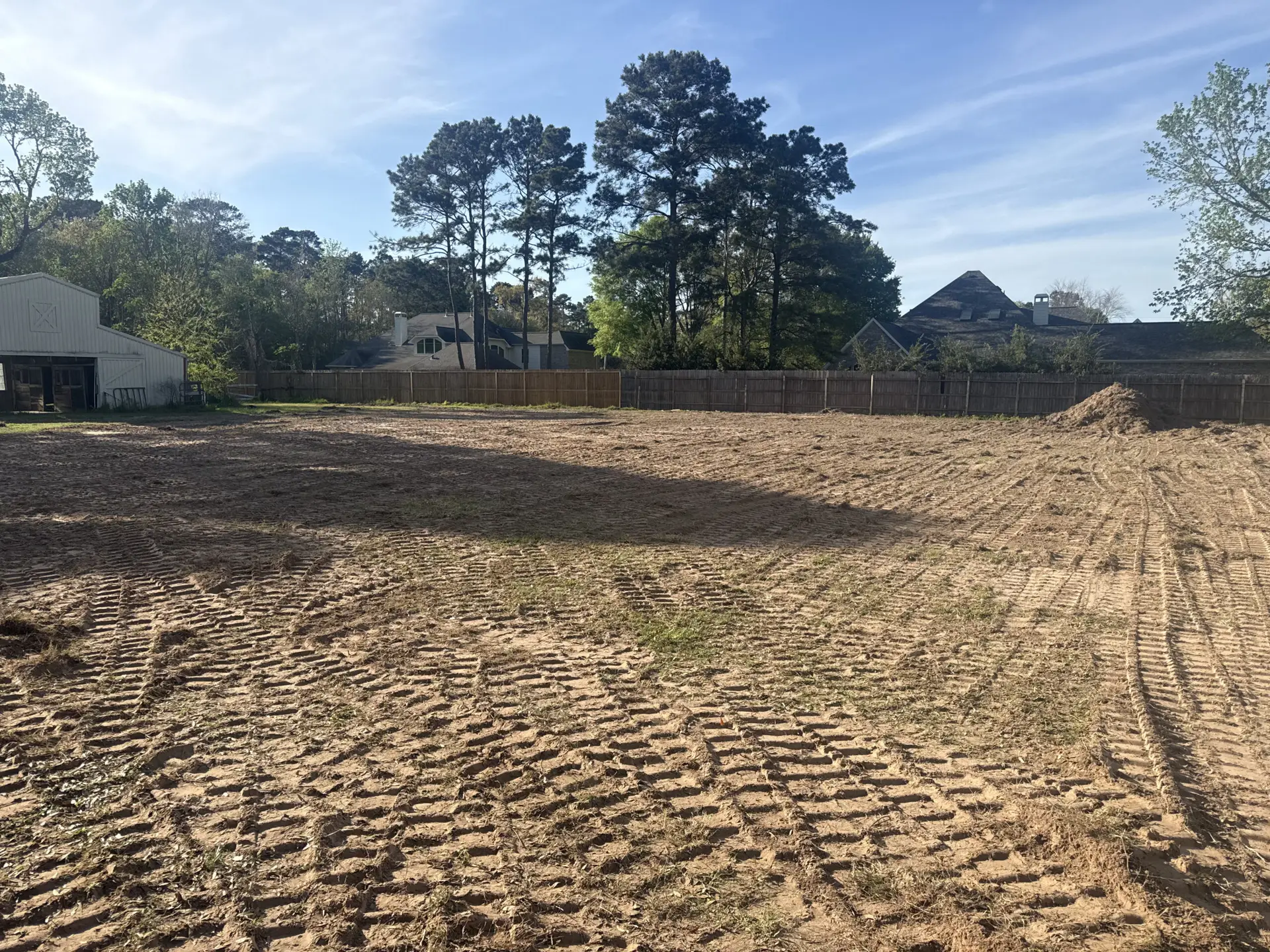
Clearing land for a new build works best in six steps, done in order: mark your boundaries, clear brush, fell trees, grind stumps, handle debris, and rough grade the pad. Skip a step or do them out of order, and you’ll pay for it later with rework, wasted trips, or a pad that won’t pass inspection. Here’s how that sequence actually plays out on a real property.
Step 1: Mark Your Boundaries and Building Footprint
Before any equipment shows up, you need to know exactly where your property lines sit and where the structure will go.
Confirm Property Lines Before Anyone Touches a Tree
A recent survey or plat map settles boundary questions before they turn into disputes with neighbors. If you don’t have one, order it now. Clearing a tree that turns out to sit on someone else’s land is a headache nobody wants.
Flag the Building Pad and Utility Runs Early
Walk the property with your builder or contractor and flag where the foundation, driveway, and utility trenches will run. This step decides which trees stay and which come down, so it has to happen before clearing starts.
Pro Tip: Call 811 before any digging begins. Utility companies mark buried lines for free, and skipping this step is how driveways end up hitting cable or gas lines.
Step 2: Clear Brush and Undergrowth First
Once boundaries and the pad are marked, brush removal comes next, not tree felling.
Why Brush Removal Comes Before Tree Work
Thick undergrowth blocks sightlines and makes it hard to see which trees are actually worth keeping. Clearing brush first gives the crew a clean view of the property and safer footing for the felling work ahead.
Hand Clearing vs. Machine Clearing for Brush
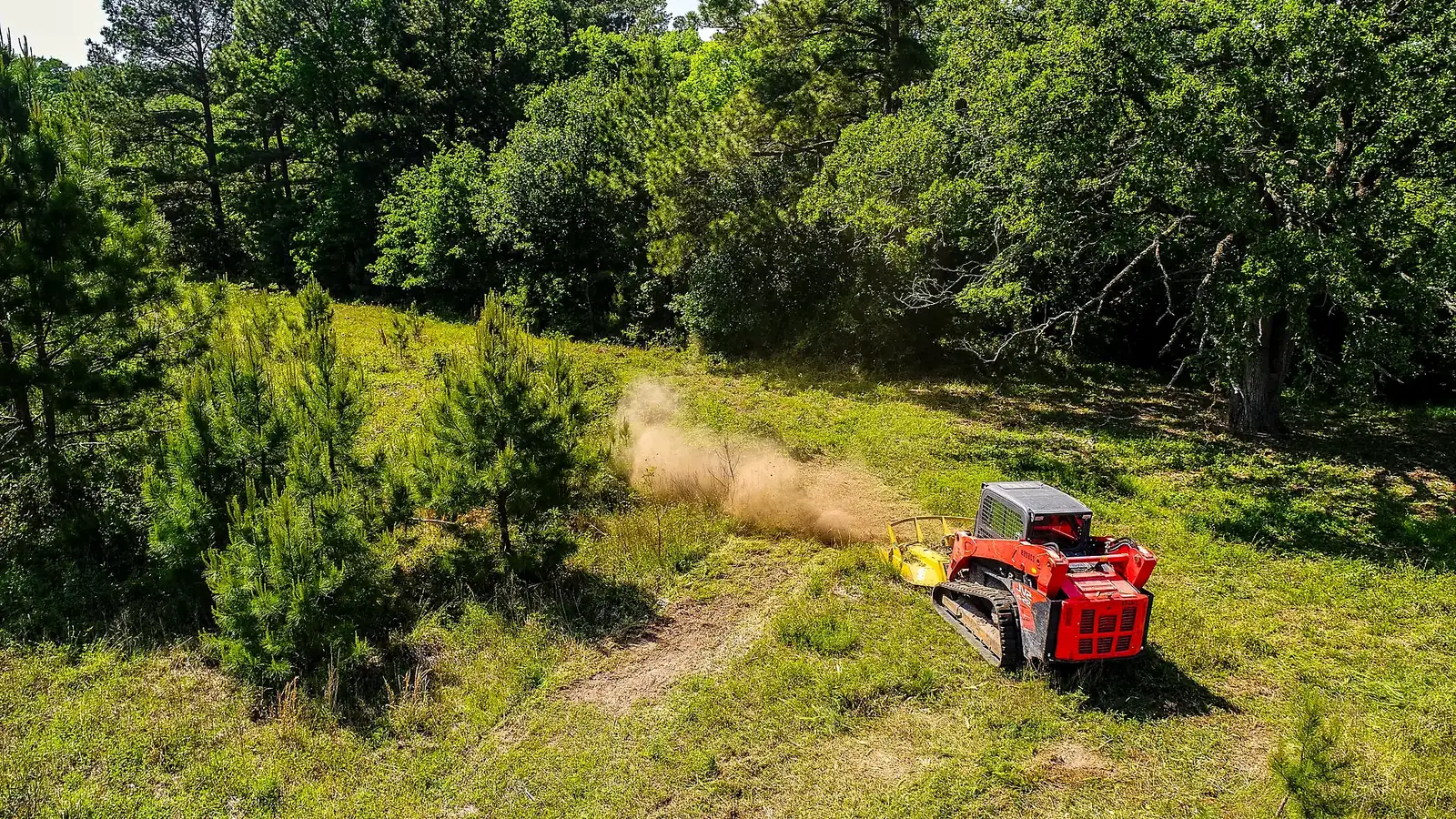
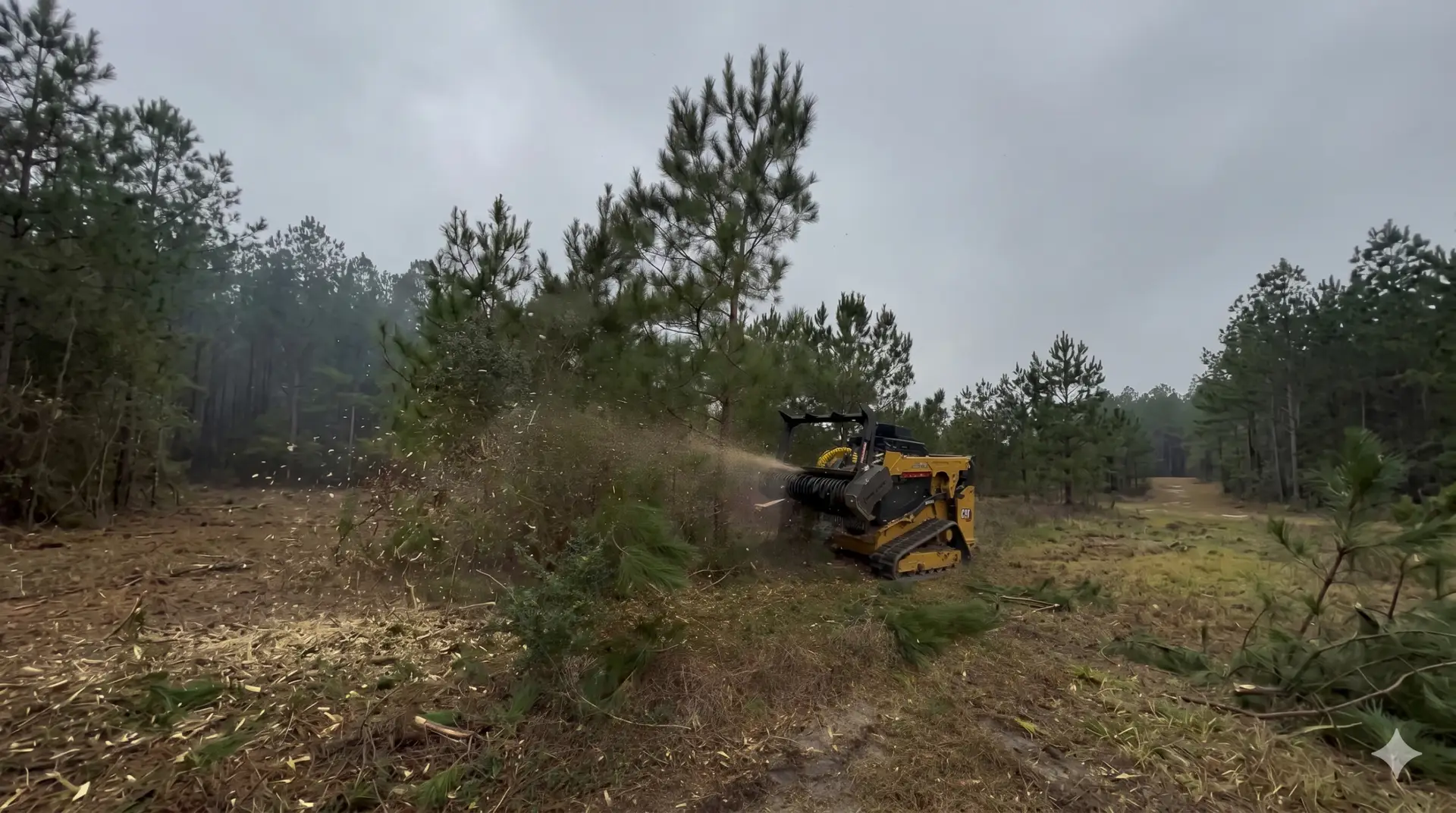
Light brush on a small lot often comes out by hand or with a skid steer. Dense, overgrown acreage usually calls for a forestry mulcher, which grinds brush into mulch on the spot instead of leaving piles behind. Our guide to land clearing methods and equipment breaks down which approach fits which property.
Did You Know: A forestry mulcher can clear one to four acres of light-to-moderate brush in a single day, depending on density and terrain.
Step 3: Fell and Remove Trees in the Build Zone
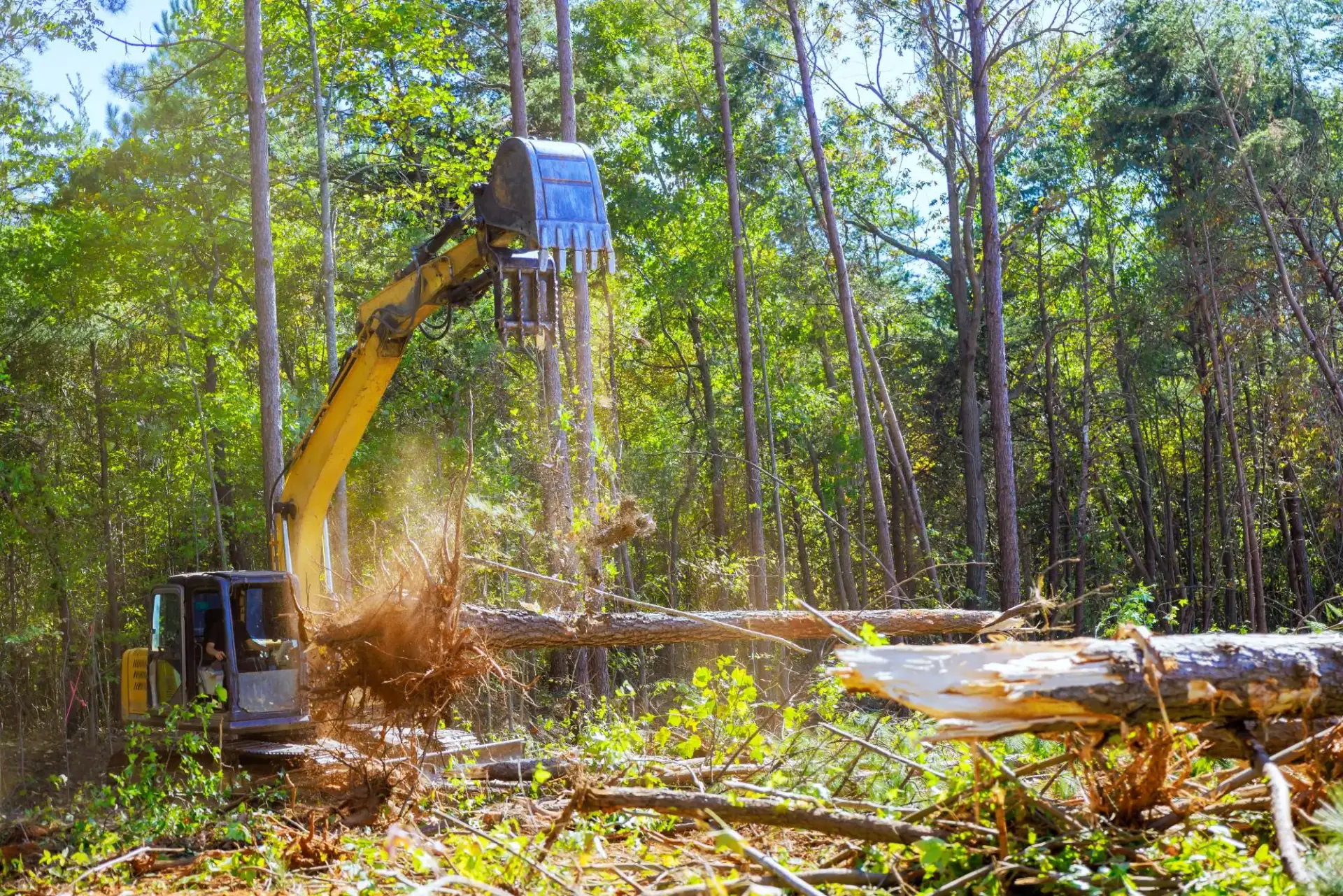
With the ground visible, tree removal comes next, but only within the flagged footprint.
What Happens to Trees Outside the Footprint
Trees outside the building pad and utility runs often stay standing. Keeping mature trees where you can protects shade, curb appeal, and in some cases, property value.
Check Local Tree Protection Rules First
Some Texas cities require a permit before removing certain protected or heritage trees. Check with your county or city before felling anything of size. It’s a five-minute call that can save you a fine later.
Step 4: Grind or Pull Stumps Before You Grade
This step gets skipped more often than any other, and it’s the one that causes the most callbacks.
Why Skipping Stump Grinding Costs You Later
We’ve walked onto properties where a homeowner tried to save money by grading straight over the stumps. Every time, the stump reappears as the ground settles, and the crew has to come back out, tear into a finished grade, and redo the work. Grinding stumps below grade before you touch a blade to the dirt saves that second trip.
Stump Grinding vs. Full Grubbing
Stump grinders chew the stump down below grade but leave the root system in the ground. Grubbing pulls the entire root ball out. If you’re building a structure on that spot, grubbing is usually the safer call.
Pro Tip: If you’re not sure whether a stump needs grinding or grubbing, check where the foundation footprint actually sits. Anything inside that line should come out completely, not just down to grade.
Step 5: Handle Debris the Right Way
Once trees and stumps are down, you’re left with a pile of material that has to go somewhere.
Mulch, Haul, or Burn: Choosing Your Method
Forestry mulching grinds debris on-site and leaves it as ground cover, which skips the hauling step entirely. Hauling means loading trucks and paying disposal or landfill fees. Burning is the cheapest option where it’s allowed, but it comes with rules.
Check the Burn Ban Before You Burn Anything
Texas counties issue burn bans during dry stretches, and burning debris during an active ban can mean a fine. The Texas A&M Forest Service keeps a live map of every county’s status, so check it before you plan a burn day.
Did You Know: County burn bans in Texas can last up to 90 days at a time, and some counties renew them back-to-back through a dry summer.
Step 6: Rough Grade the Pad and Set Drainage
With the ground clear, the last step before construction is shaping the land itself.
Prepping the Pad for Your Foundation
Rough grading levels the building pad and sets the slope water needs to drain away from the foundation instead of pooling against it. Skipping this step is one of the most common reasons new builds end up with drainage problems.
When to Bring in Site Prep and Grading
Grading is its own trade, separate from clearing. Once your land is open and stump-free, site prep and grading services shape the pad, cut the driveway, and set the final slope your builder needs to break ground.
Clearing land for a build isn’t complicated once you follow the order: boundaries, brush, trees, stumps, debris, then grade. Doing these steps out of sequence is the fastest way to add a second mobilization, a repeat trip, or a delay your builder didn’t plan for.
If you’ve got a property in the Conroe area that needs to go from overgrown to build-ready, Eberly Earthworks walks the site with you, confirms the plan, and handles every step in the right order. Contact us for a free estimate and let’s talk about what your land needs before the first tree comes down.
Frequently Asked Questions
How long does it take to clear land for building?
Most residential lots of one to five acres clear in a single day with the right equipment. Larger or heavily wooded properties can take two to three days. Stump removal and debris hauling can add time depending on the method used.
Do I need a permit to clear land for construction in Texas?
It depends on your county and city. Some municipalities require permits for clearing within city limits or for removing protected trees. Check with your local building department before work begins.
Should I clear the whole property or just the building area?
Most property owners only need the building footprint, driveway, and utility runs cleared. Leaving trees outside that zone protects shade and property value while keeping the project smaller and less expensive.
What’s the difference between stump grinding and grubbing?
Stump grinding cuts the stump down below grade but leaves the roots in the ground. Grubbing removes the entire root system. Building sites typically need grubbing, while open areas usually only need grinding.
Can I burn debris after clearing my land?
Only if your county isn’t under an active burn ban. Texas counties issue burn bans during dry conditions, and burning during a ban can result in a fine. Check your county’s status before planning a burn.