If you ask, “will a forestry mulcher grind stumps,” the short answer is sometimes, but not in the same way as a dedicated stump grinder. A forestry mulcher can process woody growth and some smaller stumps at or near ground level. It usually does not remove the full stump, root flare, or underground root system. The right machine depends on the stump size, soil, access, slope, and what you plan to do with the property next.
That difference matters on a wooded lot near Conroe or anywhere in the greater Houston area. A surface that looks clear may still contain wood below grade. Eberly uses the planned end use as the starting point, because a homesite, driveway, pasture, or trail may need a different finish.
What a forestry mulcher can do to a stump
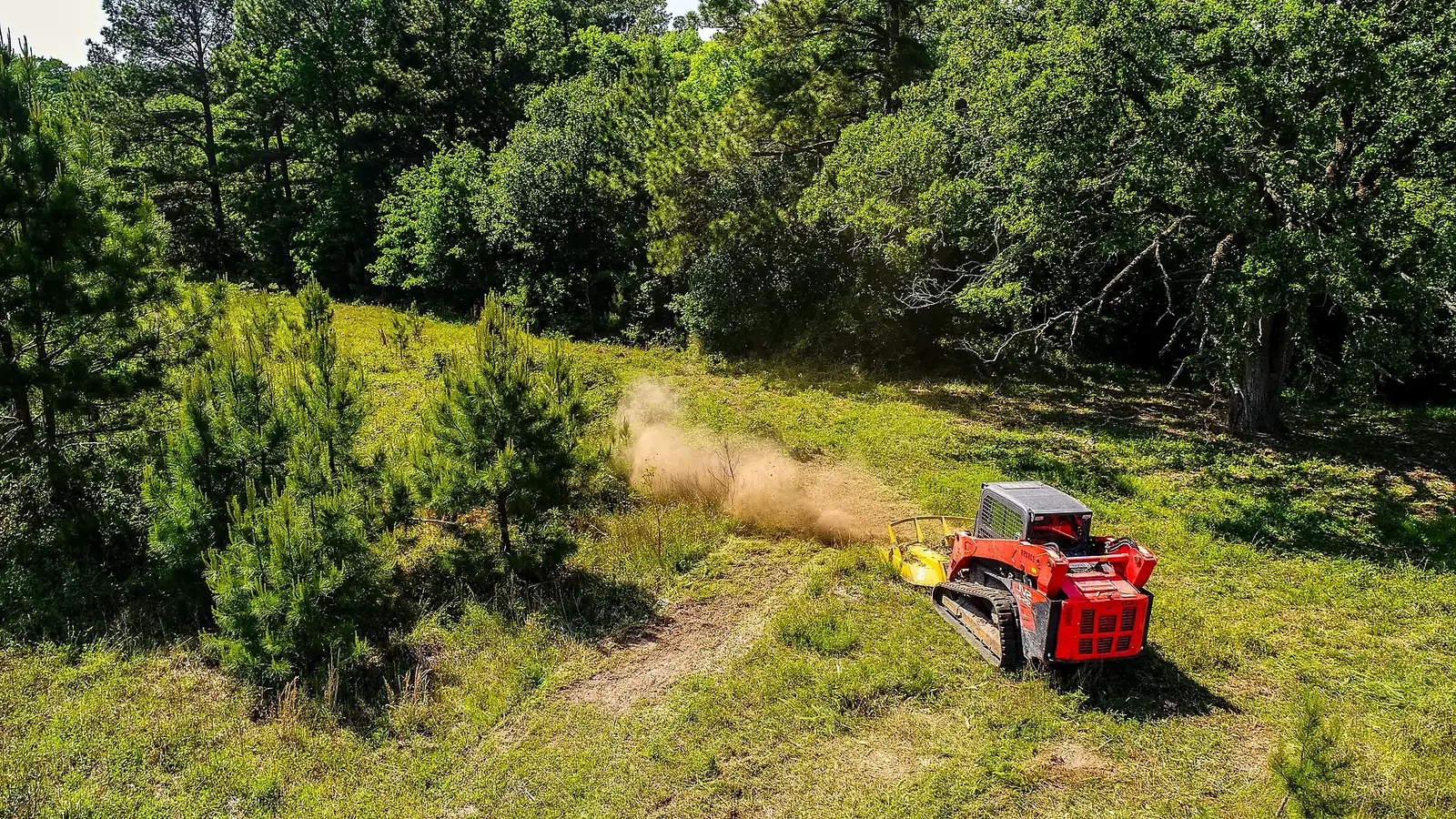
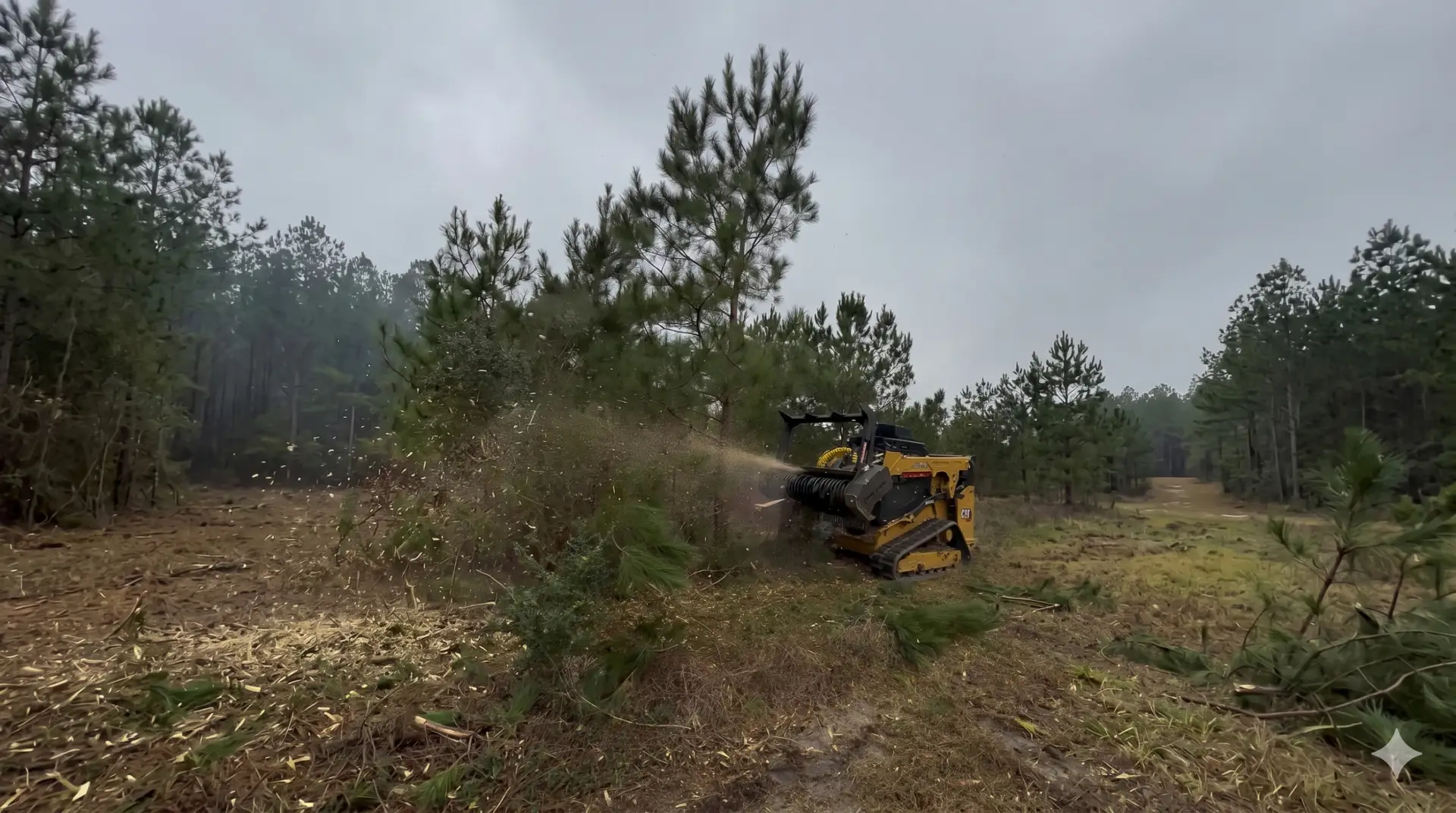
A forestry mulcher uses a rotating drum or head with cutting tools to shred brush, saplings, and other woody vegetation. The material is processed in place and spread across the soil as mulch. On the right site, the machine can also reduce smaller stumps or raised woody bases close to the surface.
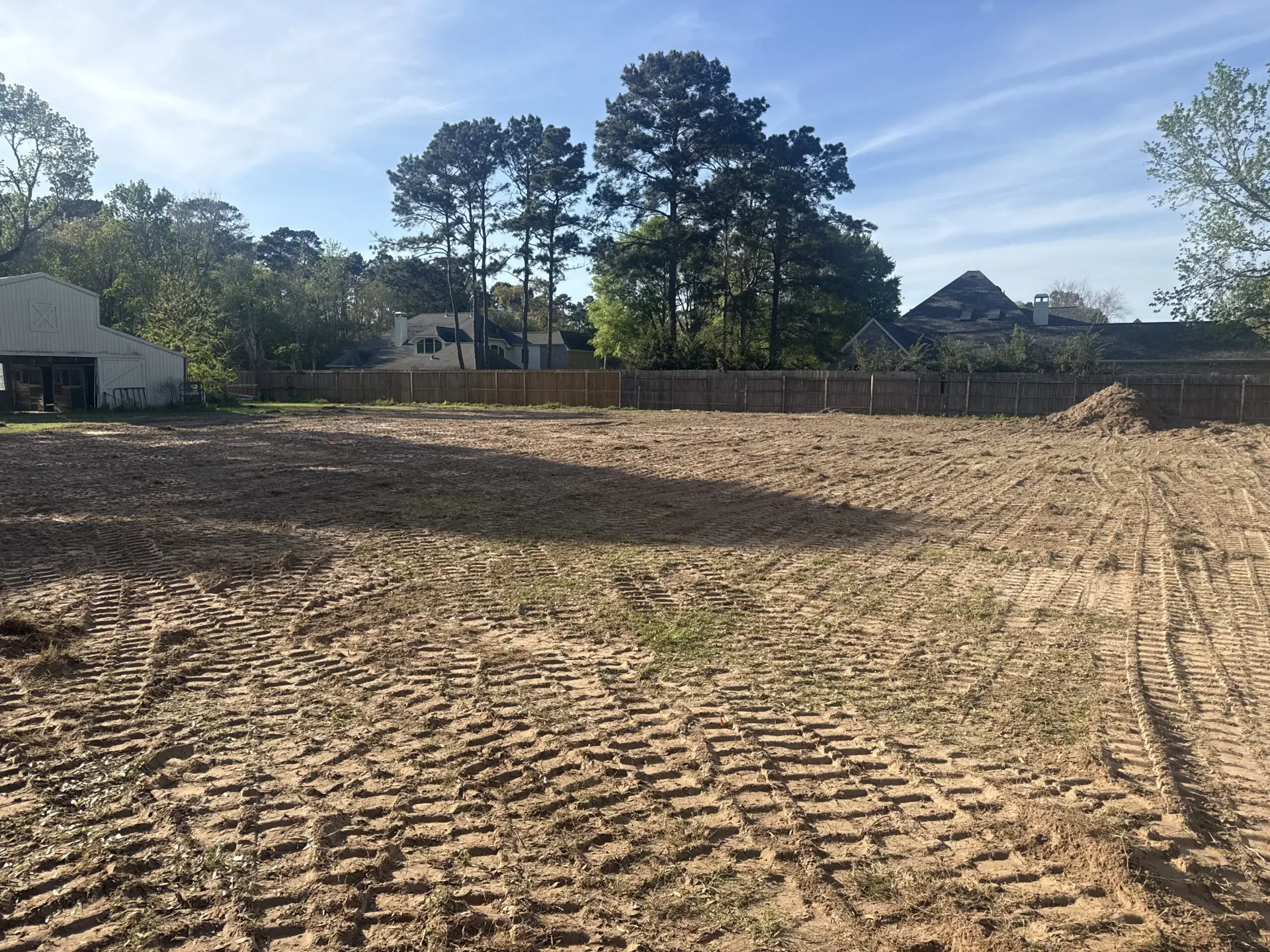
The result is not the same as pulling a stump out. The visible wood may be cut down and blended into the mulch layer, while larger wood and roots remain under the surface. Equipment size, cutting-head design, stump condition, ground firmness, and operator access all affect the result.
Size and position change the answer
A young tree base with a small diameter may be manageable for a mulcher. A wide hardwood stump with a heavy root flare may take more passes, a different machine, or a separate removal method. A stump on a steep slope, beside a fence, or near buried utilities also changes the safe work plan.
The safest answer is site-specific. Photos can help early, but an on-site look is better when stump size, soil, grade, and access affect the scope.
Did You Know? Forestry mulching is a surface-clearing method. It can leave a site looking much cleaner without taking every root below the soil out.
What a forestry mulcher usually does not remove
A mulcher is not a full root-excavation machine. It generally does not lift out a complete stump and root ball, dig a trench around buried roots, or prepare a precise building pad by itself. If the next project needs clean, compactable soil, the mulch and remaining wood may need to be removed or worked into a larger site-preparation plan.
That is why “clear” can mean different things. A recreational trail may only need a low, passable surface. A future driveway may need additional grading and compaction. A building area, septic area, or utility route may need grubbing and excavation so roots and organic material do not remain in the work zone.
Above-grade cleanup versus below-grade removal
Above-grade cleanup focuses on what people can see and what may interfere with mowing, access, or general property use. Below-grade removal focuses on the material that can affect soil stability, drainage, construction, or future maintenance.
Neither result is automatically better. The important question is whether the finish matches the property’s next use. Eberly’s forestry mulching service can be part of that plan, but the work should not be described as complete stump excavation when it is not.
When a dedicated stump grinder is a better fit
A dedicated stump grinder is often the better choice when you want to remove one or more visible stumps without clearing an entire wooded area. It is built to work around a stump and grind the wood below the surrounding grade, subject to the machine and site limits.
Stump grinding can make sense when:
- A single stump blocks a lawn, fence line, walkway, or landscape area.
- The surrounding trees and brush should remain in place.
- You need the stump reduced below grade for a planned surface treatment.
- The work area has enough access for the grinder and safe chip management.
Grinding still may not remove every root. The remaining cavity may need to be filled, and the area may settle as organic material breaks down. If the space will carry a structure, driveway, or other load, ask whether excavation and suitable fill are needed instead.
Pro Tip: Tell the contractor what will occupy the area after clearing. “Make it look clean” and “prepare it for a driveway” are different scopes, even when they start with the same stump.
When grubbing or excavation is the right next step
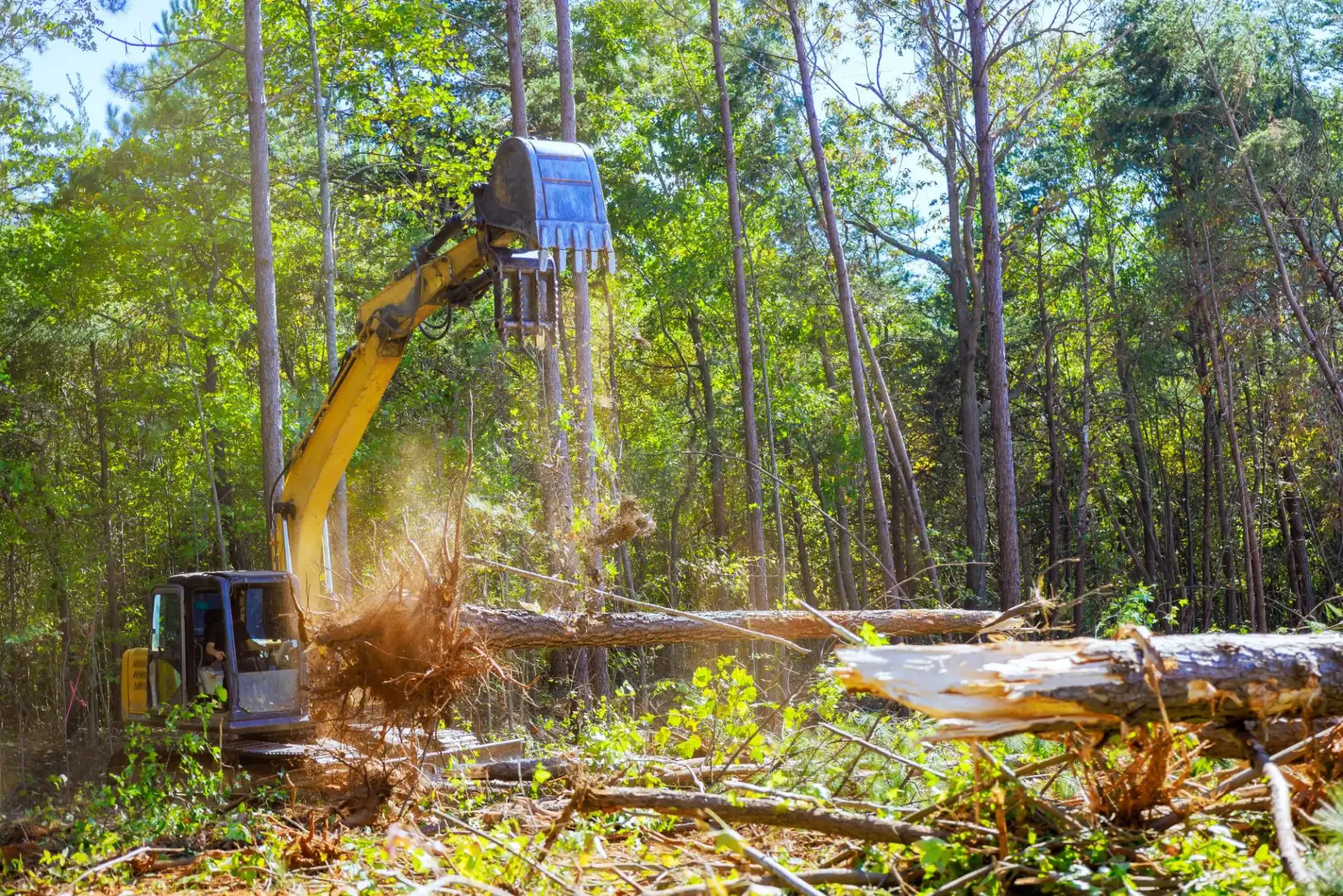
Grubbing removes stumps, root balls, and other organic material from the soil. Excavation can then reshape the area, manage unsuitable material, and prepare for a planned grade. This approach is often a better fit for building sites, driveways, septic work, drainage improvements, and other projects where buried wood could create a problem later.
A site may need more than mulching when:
- The stump is large or has a wide root flare.
- The area will support a foundation, slab, driveway, or parking surface.
- Roots are mixed with the planned building or utility footprint.
- The soil needs grading, drainage work, or compaction after clearing.
- A fence, structure, or property line limits machine movement.
Eberly’s land clearing service and site prep and grading service can be evaluated together when a property needs both vegetation removal and a prepared finish.
Five questions to answer before choosing the machine
Before work begins, gather these details:
- How large are the stumps? Measure the widest part of the stump or root flare, not just the trunk that was visible before cutting.
- What will use the area next? A trail, pasture, lawn, driveway, and building pad each call for a different finish.
- How much access is available? Gates, fences, soft ground, slopes, overhead limbs, and nearby structures affect machine choice.
- Are utilities marked? Call 811 before you dig before any work that may disturb soil. Marked utilities do not remove every site risk, but they give the crew important information.
- What should happen to the mulch and removed material? Leaving mulch in place may fit a wooded property. A construction area may need material hauled away or managed as part of grading.
These answers help separate a surface-clearing request from a below-grade site-preparation request. They also make the estimate more accurate because the contractor can plan the right equipment and number of work steps.
A practical decision guide for Texas properties
Choose forestry mulching when the main goal is to reduce brush, saplings, and smaller woody growth across a larger area while leaving a natural mulch layer. It can be an efficient first step for improving access, opening a view, or managing overgrowth.
Choose a stump grinder when a limited number of stumps need to be reduced and most nearby vegetation should stay. Choose grubbing and excavation when the project needs root removal, clean soil, a new grade, or a construction-ready area.
Many properties need a combination. A crew may mulch the wooded area, grind or grub selected stumps, and then grade a driveway or building area. The sequence should follow the end use, not just the first machine.
The U.S. Forest Service guide to silvicultural treatments provides broader background on managing woody vegetation and site conditions. Local soil, drainage, access, and the planned project still control the field decision.
The bottom line
Will a forestry mulcher grind stumps? It can reduce some smaller stumps and woody bases near the surface, but it usually will not remove a complete stump and underground root system. If you only need surface clearing, mulching may be a good fit. If you need a clean building area, driveway base, or construction-ready grade, ask about stump grinding, grubbing, excavation, and grading as part of the same plan.
For a Conroe-area property, share the stump sizes, access conditions, and intended use with Eberly Earthworks. The team can help match the clearing method to the finish you actually need. Contact Eberly Earthworks to discuss the site and request an estimate.
Frequently asked questions
Can a forestry mulcher remove a large tree stump?
Usually not as a complete removal. A mulcher may reduce some exposed wood, but a large stump and root flare often need a grinder, excavator, or grubbing plan based on the site’s final use.
Does forestry mulching remove tree roots?
No, not fully. Forestry mulching processes woody material near the surface, while larger roots and the root ball can remain below grade.
Is stump grinding better than forestry mulching?
It depends on the job. Stump grinding suits isolated stumps when nearby vegetation should remain, while forestry mulching suits broader brush and tree reduction across a larger area.
Can I build over a stump after it is mulched?
Not without checking the site requirements. A building or driveway area may need organic material and roots removed, followed by suitable grading and compaction.