Land clearing is the process of removing trees, brush, stumps, and vegetation from a piece of property to make it accessible and usable. The right method depends on property size, terrain, tree density, and what you plan to do with the land afterward — and choosing the wrong approach costs time and money you can’t get back.
If you’re planning to build, farm, ranch, or simply reclaim overgrown acreage, this guide walks you through every major land clearing method, the equipment behind each one, what the process actually looks like from start to finish, and how to know which approach fits your property.
What Land Clearing Actually Involves
Most people picture a bulldozer pushing trees over. That’s one method — but land clearing covers a wider range of approaches depending on the goals of the job.
At its core, clearing land means removing what’s growing on it so the ground below becomes workable. On a lightly wooded residential lot, that might mean taking down a few dozen trees and grinding stumps. On a heavily forested 50-acre tract, it could mean weeks of work with multiple machines, debris hauling, and soil preparation afterward.
The size and type of vegetation, access points, soil conditions, and your end goal all shape which methods make sense for your specific property.
Did You Know: In Texas, the ag exemption isn’t actually a tax exemption — it’s a special valuation that calculates your property taxes based on agricultural productivity rather than market value. That distinction can mean thousands of dollars in annual savings for qualifying landowners.
The Four Main Land Clearing Methods
Hand Clearing
Hand clearing uses manual labor — chainsaws, axes, and brush cutters — to remove vegetation. It’s the most selective method available and works well for properties where you want to keep certain trees, clear only specific sections, or work around structures and utilities.
It’s slower and more labor-intensive than mechanical clearing. For large acreage, it becomes impractical quickly. But for urban lots, properties with terrain limitations, or jobs where precision matters, hand clearing gives you control that machines can’t match.
Forestry Mulching
Forestry mulching uses a single machine equipped with a rotary drum and carbide teeth to grind trees, brush, and stumps directly into mulch on-site. Nothing gets hauled away. The mulch layer stays on the ground, reduces erosion, and breaks down over time to add organic matter back to the soil.
This method is fast, efficient, and far less disruptive to the ground than mechanical pushing or grubbing. It works well for properties where soil preservation matters, where burning isn’t permitted, or where you want a clean result without a debris pile.
One trade-off: mulching doesn’t fully remove stump root systems. If you need a completely clean foundation pad, follow-up grubbing or grading may be required. For forestry mulching services on your property, the equipment and end condition are worth a direct conversation before you commit.
Pro Tip: Forestry mulching is one of the fastest methods for brush-heavy properties with trees under 12 inches in diameter. Properties with predominantly smaller growth are ideal candidates.
Grubbing and Dozing
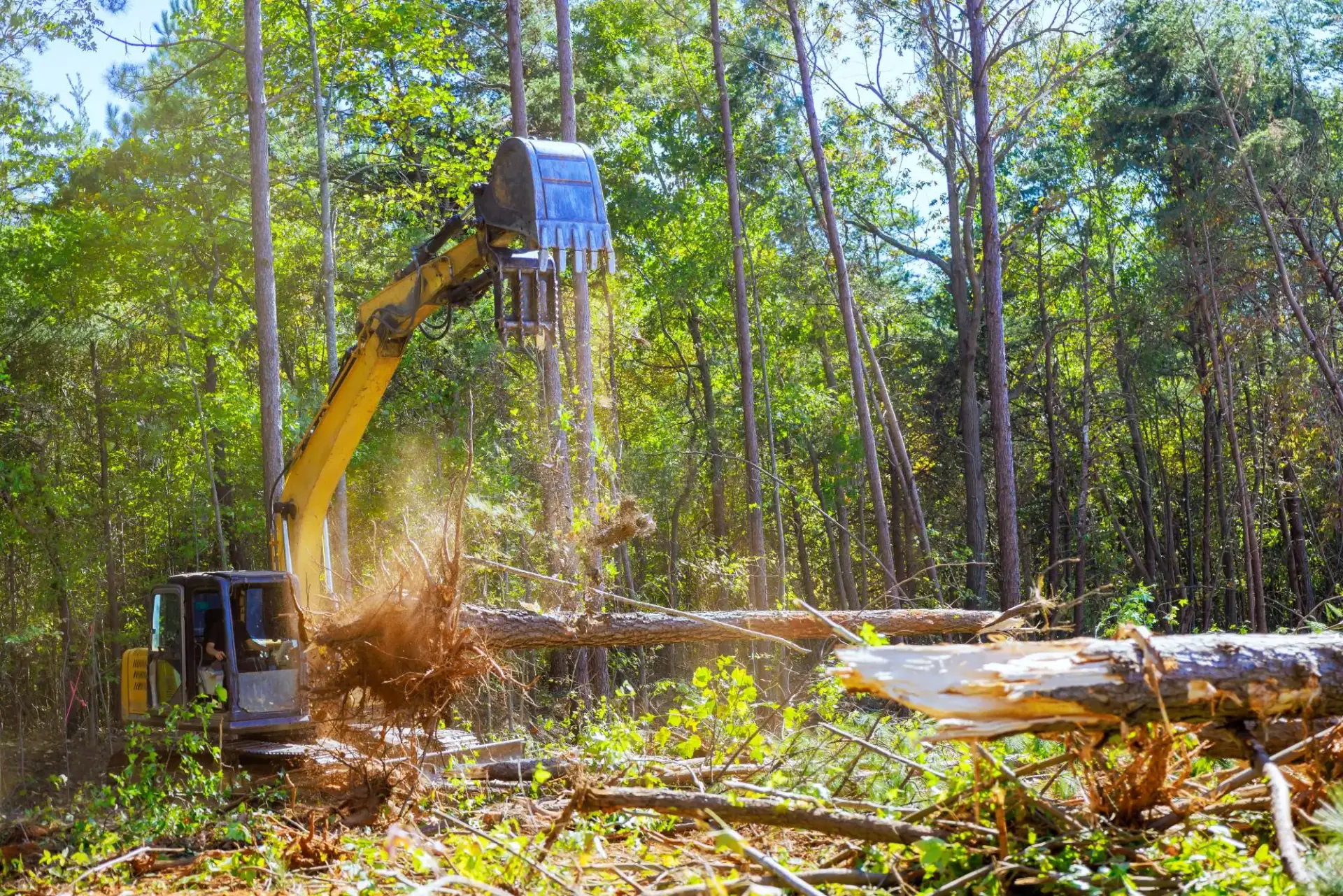
Grubbing removes stumps and root systems by digging them out. Dozing uses a bulldozer to push trees over, root systems and all, and pile them for removal. These methods are aggressive — they move a lot of material quickly but leave more soil disturbance than mulching.
For properties being fully developed (home sites, commercial pads, agricultural conversion), dozing and grubbing are often the right call. The debris piles require hauling or burning, and the raw earth left behind typically needs grading before it’s ready for construction.
This is the approach most people picture when they think of land clearing at scale, and it’s effective — but the follow-up work required afterward is part of the total project scope.
Chemical Clearing
Chemical clearing uses herbicides to kill unwanted vegetation. It’s used for brush control on pastures and fence lines, invasive species management, and right-of-way maintenance. It’s not a stand-alone method for preparing land for construction — it works best as a targeted tool alongside mechanical clearing.
Did You Know: Herbicide-based clearing is commonly used in Texas for controlling invasive cedar (juniper) and mesquite on ranch land. Some ranchers use aerial application on large acreage where mechanical access is limited.
Land Clearing Equipment: What Gets Used and Why
The machines on a land clearing job depend on what method is being used and the scale of the work.
Forestry mulchers (drum or disc head, carrier machine) process trees and brush in a single pass. The carrier is typically a skid steer, tracked machine, or dedicated mulcher. Machine selection depends on tree diameter and terrain type.
Bulldozers are the workhorse for dozing operations. A D6 or D8 can push significant timber efficiently. Blade type matters — a straight blade for pushing debris, a brush blade for cutting through dense growth.
Excavators are used for grubbing operations, pulling stumps, digging out root masses, and loading debris. A mid-size excavator (20–30 ton class) handles most residential and light commercial clearing work.
Skid steers with grapple attachments move debris piles, load trucks, and handle cleanup in tight spaces after the primary clearing is done.
Stump grinders handle stumps mechanically after trees have been felled, grinding them below grade without removing the root system. They’re useful when full grubbing isn’t required.
For a deeper look at land clearing equipment and which machines suit which jobs, the right answer is almost always driven by what’s actually on the property — which is why a site visit before estimating is standard practice.
Pro Tip: Don’t size equipment by acreage alone. A 5-acre lot with 80-foot hardwoods requires heavier iron than a 20-acre pasture with light cedar and brush. Talk to your contractor about tree diameter, not just property size.
Permits and Texas-Specific Considerations
Texas does not have a statewide requirement to permit land clearing on private property, but local regulations vary. Some counties and municipalities require clearing permits, particularly for properties within city limits, in flood plains, or near waterways. HOA rules can also apply.
Burning cleared debris is subject to Texas Commission on Environmental Quality (TCEQ) rules and local burn bans. Many Texas counties have seasonal burn bans in effect — check your county’s current status before planning a burn-off.
If your property is near a creek, river, or wetland, federal and state regulations around vegetation removal near waterways apply. A pre-job call to your county or a quick check with TCEQ can save you from a costly compliance issue.
Did You Know: Some Texas cities have ordinances requiring permits for the removal of protected trees — often any tree over 19 inches in diameter, with stricter rules for designated heritage species including oaks, pecans, cedar elms, and bald cypress. Requirements vary significantly by municipality, so check local ordinances before work begins.
What to Expect on the Day of the Job
Once an estimate is agreed on and scheduling is confirmed, the clearing process itself is usually straightforward. The crew arrives, walks the property with you to confirm boundaries and scope, then gets to work.
Most residential and small acreage jobs finish in a single day. Larger properties or those with complicated terrain may require two or three days. Debris handling — whether that means on-site mulching, piling for burn, or loading for haul-out — is part of the scope conversation before the job starts, not something figured out on the fly.
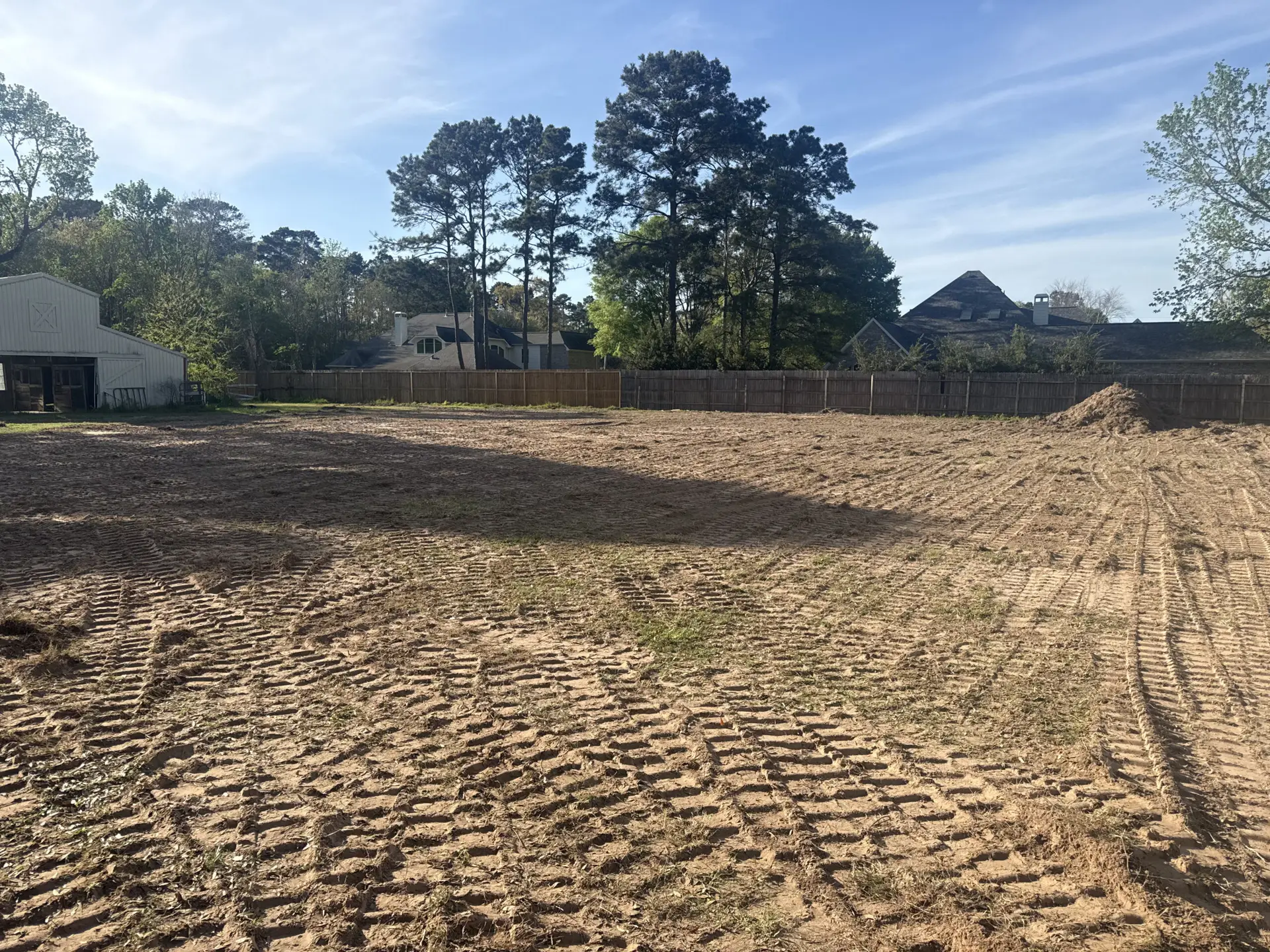
After clearing wraps, the land is open and accessible. Depending on your plans, site prep and grading is often the logical next step — leveling the terrain, shaping a building pad, or spreading gravel for an access drive.
What Comes After Clearing
Clearing is almost never the last step. Once the ground is open, you’ll have a clear picture of what the land needs before you can use it. Common follow-on work includes rough and finish grading, building pad construction, gravel driveway installation, and in the right terrain, pond building.
If there are old outbuildings, barns, or other structures on the property, structure demolition often happens alongside or immediately after clearing so everything is handled in one mobilization.
Pro Tip: Coordinate your clearing contractor with your builder or general contractor before work begins. Knowing where the building pad, driveway, and utility runs will go lets the clearing crew leave the right material in the right places — saving you a second round of grading.
Frequently Asked Questions
What is the most common land clearing method in Texas?
Forestry mulching and mechanical dozing are the two most common methods in Texas. Mulching is preferred for brush-heavy properties where soil preservation matters; dozing is used for full development projects where all vegetation and root systems need complete removal.
How long does land clearing take per acre?
A forestry mulcher can clear 1–4 acres per day depending on vegetation density and terrain. Mechanical dozing moves faster on open ground but requires more cleanup time. Most residential lots of 1–5 acres clear in a single day.
Does land clearing damage the soil?
Aggressive dozing and grubbing disturb the topsoil layer significantly. Forestry mulching is much gentler — the mulch layer stays in place and helps prevent erosion. If soil health matters for your end use, mulching is the better starting point.
What’s the difference between land clearing and grading?
Land clearing removes vegetation and surface growth. Grading shapes and levels the earth after clearing. They are separate phases of site preparation, and most construction-ready lots require both.
Do I need to be on-site during land clearing?
Being present at the start of the job to confirm boundaries is recommended. After that walkthrough, most property owners leave the crew to work. Your contractor should contact you if anything unexpected comes up.
Ready to move your property forward? Contact Eberly Earthworks for a free estimate and let’s talk through what your land needs and which clearing method fits your goals.